

Home » Archives for Swami Nirmalananda Giri (Abbot George Burke) » Page 33

The Process of Reincarnation

What do the ancient scriptures of India say about the process of reincarnation? The following verses from the Brihadaranyaka Upanishad alone in all the upanishads describe to some degree the process of reincarnation. Dreaming and waking “Yajnavalkya said: ‘The Self, having in dreams enjoyed the … Continue reading

Reincarnation and Memory: Where Do Our Memories Go?

reincarnation and memory

Q: When reincarnated do we retain our current memories and interests, or what it is that makes us feel “ourselves”?

All the memories of our past lives remain in the subconscious mind in the forms of impressions in the mind-substance (chitta) which is a field of magnetic energy. They sort of float around, vibrating individually as samskaras, but those of similar magnetism become attracted to one another and become bundles of samskaras called vasanas. Because of their combined force the vasanas are experienced as impulses, attractions and aversions in the mind.

Thus we enter each life with a definite personality that has the potential of unfoldment and expression in response to the experiences we undergo in that life. However, the responsiveness depends on the evolutionary level of the individual and the character of the experiences.

Evolution and the subconscious

The more evolved a person is, the greater is the level of sensitivity and response. In those of lower evolution the subconscious is truly “buried,” whereas in those of higher development the subconscious and conscious minds influence and interact with one another.
Continue reading

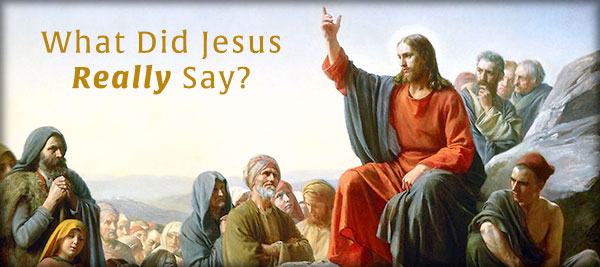
What Did Jesus Really Say in the Sermon on the Mount?

Sermon on the Mount
In this introduction to A New Look at the Beatitudes, I will be using The New Testament: An Expanded Translation, by Kenneth Wuest since it presents the more philosophical side of Jesus words. To do this, it is extremely literal, sometimes so much so that the English is awkward, but it extracts the full meaning of the Greek wording. The esoteric understanding, of course, will be up to us.

“And having opened His mouth He went to teaching them, saying, Spiritually prosperous are the destitute and helpless in the realm of the spirit, because theirs is the kingdom of heaven.”
–Matthew 5:3

Spiritually prosperous

Wuest is translating as “spiritually prosperous” the Greek word makarios. The word can mean both blessed and happy, but both expressions are too weak. Makarios means supremely blessed or happy in the sense that it is the ultimate degree of blessedness or happiness. Yet, it also means to be fortunate–in the literal sense of possessing a fortune and “well off”–prosperous. The idea is that of spiritual abundance, of spiritual superabundance. “God is able to make all grace abound toward you; that ye, always having all sufficiency in all things, may abound to every good work.” (II Corinthians 9:8)

The fullness of spiritual capacity and manifestation is implied here. Modern Christianity is so materialistic that virtually every time they speak of being blessed they mean gaining money. This is especially true of the televangelists and their forerunners the “New Thought” churches. Therefore Wuest is certainly justified in putting the adjective “spiritually” in the translation. Otherwise the Sermon on the Mount will just be another “God’s Prosperity Plan For His People.”

Continue reading